
Gutters that keep water off your house.
Seamless gutter installation, replacement, repair and gutter guards in Council Bluffs, Carter Lake and the towns around them. Runs made to length on site, hung on hidden hangers, and downspouts that carry the water away from your foundation.
- Free on-site measure
- Old gutters removed
- 5" & 6" K-style
What do my gutters need?
Tap what you're seeing. You'll get a starting point, then a free measure confirms it.
Leaky seams, loose hangers and lost slope can usually be fixed.
Book a free measureA guide only. The contractor confirms what's needed on the free visit.
Council Bluffs is the whole patch.
Calls go straight to a gutter contractor who works Council Bluffs and the towns around it, not a national call centre. They know what a western Iowa winter does to a gutter, which older streets still have the original sectional gutters, and how much water a summer storm puts down a downspout.
That matters because gutter problems here are seasonal. Ice pulls gutters down in January, spring storms show which runs are too small, and fall leaves block the downspouts. A contractor who works these streets every week knows to look for all three on one visit, and quotes the fix for the whole system instead of the one drip you called about.
- Council Bluffs, Carter Lake and western Iowa towns
- Gutters sized for Iowa storms and built for Iowa ice
- Repairs, replacements and new installs, all from one call
Do you do gutters in my town?
Iowa weather is hard on gutters.
- Water pouring over the front of the gutter every time it storms
- Drips at every seam and corner of old sectional gutters
- Runs sagging or pulling off the fascia after winter ice
- Downspouts dumping water right beside the foundation
- Puddles, washed-out mulch, or a damp basement after rain
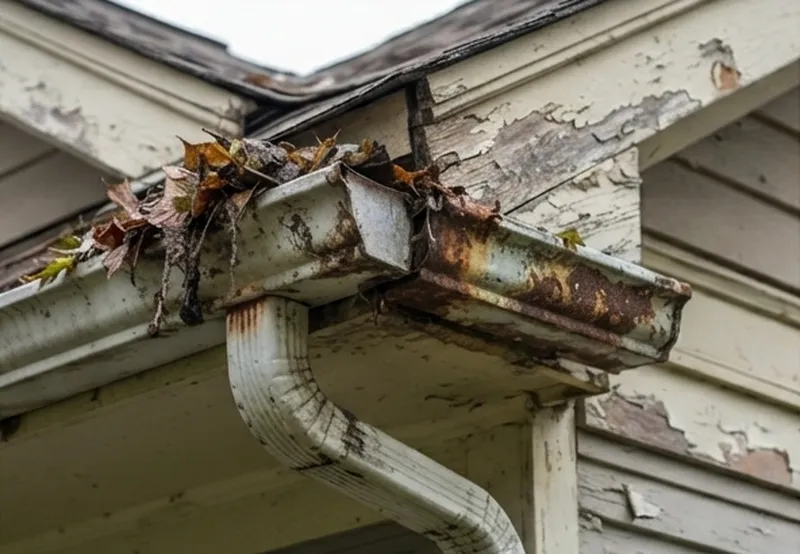
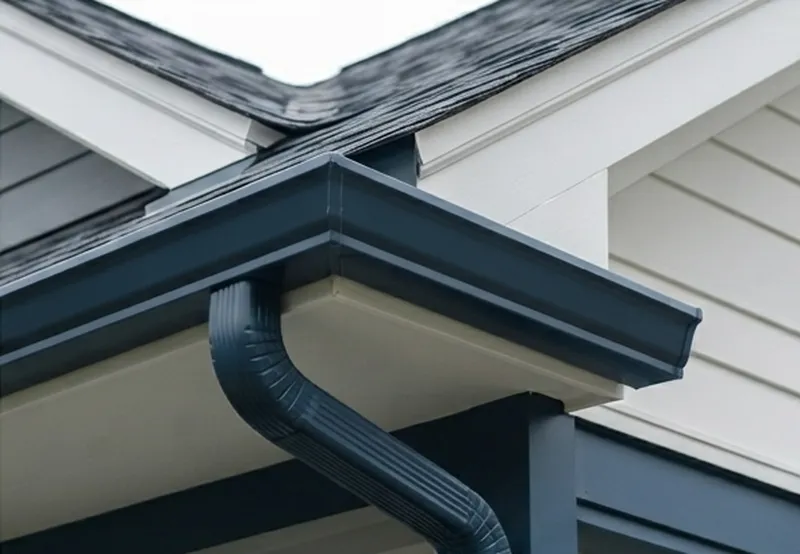
Not every house needs the same gutters.
Tap what yours is like.
Size, material and extras depend on your roof, your trees and your winters. Here's where the contractor usually starts.
5-inch seamless K-style
- 5-inch K-style aluminum handles average roof areas on single and two-story houses
- 2x3 or 3x4 downspouts, placed so no run is too long for one outlet
- Hidden hangers fastened into solid fascia
- Downspouts extended away from the foundation
6-inch gutters, 3x4 downspouts
- Steep roofs send water off fast enough to overshoot a 5-inch gutter
- 6-inch K-style carries noticeably more water per run
- Larger 3x4 downspouts so the outlet isn't the bottleneck
- Splash guards at inside corners under roof valleys
Seamless gutters + micro-mesh guards
- Micro-mesh guards keep out leaves, seeds and needles
- Fewer clogs means less overflow and less standing water
- Larger downspouts clog less often
- Still plan a periodic check, because no guard is maintenance-free
Replace with seamless, check the fascia
- Old sectional gutters leak at every joint as the sealant ages
- Fascia behind long-leaking gutters is often soft and needs replacing first
- Half-round profiles are available to suit traditional houses
- Spikes and ferrules swapped for hidden hangers
Strong hangers + fix the attic
- Closer hanger spacing to carry the weight of ice and snow
- Seamless runs with fewer joints for ice to split
- Ice dams start with attic heat, so insulation and ventilation are the real fix
- Heat cables can help in problem spots
Time new gutters with the roof
- Drip edge and gutters set together so roof water lands in the gutter
- Old gutters come off once, not twice
- A good time to fix downspout placement and sizing
- Ask your roofer when the gutter crew should come in
The bit you never see is the bit that matters.
A gutter is only as good as what holds it up and where it sends the water. Tap each layer to see what goes into a proper job.
The seamless gutter
Formed on site from one coil, cut to the exact length of each wall. The only joints are at corners and outlets. It's the part people choose by colour, but it only works as well as what holds it up.
Hidden hangers
Brackets inside the gutter, screwed through the fascia into solid wood. Spaced close enough to carry a gutter full of ice. This is what stops sagging and pull-off.
Fascia board
The board the gutter hangs on. Years of overflow and leaks rot it from behind. Hanging new gutters on soft fascia means they'll pull away again, so it's checked when the old gutters come off.
Drip edge and slope
Drip edge flashing makes sure roof water lands in the gutter, not behind it. The gutter falls gently toward each downspout (a common guide is about 1/4 inch per 10 feet) so water doesn't sit in the run.
Downspouts and discharge
Enough downspouts for the roof area, sized 2x3 or 3x4, with elbows and extensions that carry water several feet from the foundation. This is where basement water problems are won or lost.
What each season does to your gutters
Council Bluffs sits on the east bank of the Missouri River at the foot of the Loess Hills, and gets the full spread of Midwest weather.
Winter brings snow, ice and freeze-thaw cycles. Snow that melts by day and refreezes at night builds ice at the eaves. That ice is heavy. It pulls on hangers, bends gutter lips and can tear a run off the fascia. Water backed up behind it can get under the shingles.
Spring and summer bring hard thunderstorms that drop a lot of rain fast. Undersized gutters and downspouts can't keep up, so water sheets over the front and lands right beside the foundation.
Fall fills gutters with leaves, seeds and twigs from mature trees. A clogged gutter holds standing water, which adds weight, rots the fascia and breeds mosquitoes.
Quick checks you can do today
- During the next rain, watch each gutter run and each downspout outlet.
- Look for water going over the front edge, dripping from seams, or coming from behind the gutter.
- Check the ground at each downspout for erosion or pooling.
- From the ground, look along each run for sagging and gaps against the fascia.
- In the basement, check walls and window wells near downspouts after storms.
Mention what you find when you call. It helps the contractor bring the right parts.
Repair or replace? What to look for.
Gutters fail slowly, so most people don't notice until water is already where it shouldn't be. Walk around the house during the next rain and look for these:
- Water spilling over the front edge even when the gutter isn't full of leaves. The slope is wrong, the downspout is blocked, or the gutter is too small for that roof section.
- Drips at the corners and seams. Sealant on sectional gutters breaks down over the years. Seamless gutters remove most of those joints.
- Sagging or pulled-away runs. The hangers have let go, or the fascia board behind them has rotted.
- Peeling paint, rust spots or orange streaks on the gutter or the siding below it.
- Water stains or rot on the fascia and soffit.
- Puddles, washed-out mulch or erosion lines along the foundation, or water in the basement after storms.
- Downspouts that end right at the wall or have come apart at the elbows.
One or two of these on gutters that are otherwise solid usually means a repair: reseal, rehang, re-pitch or reconnect. Several at once, or rust and splits along the runs, usually means replacement is the better spend. You'll be told which on the visit, and you can get both priced.
What a good install looks like
- A steady slope toward each downspout so water doesn't sit in the run. A common guide is about 1/4 inch of fall per 10 feet.
- Hidden hangers spaced close enough to carry ice and snow, fastened into sound fascia or rafter tails.
- Enough downspouts for the roof area, and none draining onto a lower roof without a splash guard.
- Downspouts extended or piped several feet out from the foundation.
- Corners and end caps sealed, and outlets cut clean.
- The roof edge drains into the gutter, not behind it.
- Old gutters hauled away and the job site cleaned up.
Gutter sizes and materials.
Most Council Bluffs houses have K-style gutters. The flat back sits tight against the fascia and the front looks like crown moulding. It's the profile most seamless machines make, and it holds more water than a half-round gutter of the same width.
| Option | What it is | Best for | Watch out for |
|---|---|---|---|
| 5" K-style | The standard residential size. Pairs with 2x3 or 3x4 downspouts. | Most single and two-story houses with average roof areas. | Can overflow on big or steep roof sections in heavy storms. |
| 6" K-style | Wider and deeper. Usually paired with 3x4 downspouts. | Large roofs, steep pitches, long runs, valleys that dump water in one spot. | Bigger look on the house. Not every roofline needs it. |
| Half-round | A semicircle profile, often on older or traditional houses. | Historic homes and a classic look. | Holds less water than K-style of the same width. Usually costs more. |
| Aluminum | Formed on site from coil. Comes in many colours. | The everyday choice. Doesn't rust and is light on the fascia. | Thinner gauges dent more easily from ladders and hail. |
| Steel | Heavier and stiffer than aluminum. | Homes where strength and dent resistance matter most. | Can rust once the coating is scratched or worn. |
| Copper | Premium metal that weathers to a brown, then green, patina. | High-end homes and accent areas like bays and entries. | Much higher price. Joints are soldered by specialists. |
The gutter catches it. The downspout decides where it goes.
A lot of the water problems people blame on gutters are really downspout problems.
Enough downspouts. Each downspout can only drain so much roof. A long run with one outlet at the far end often overflows in the middle during a storm. Adding a downspout, or going from 2x3 to 3x4, is often cheaper than replacing the whole gutter.
Discharge away from the house. A downspout that ends at the foundation dumps all the water from its roof section in one spot. Extensions, splash blocks or underground drain lines carry it out into the yard.
Watch the grade. If the soil slopes toward the house, water from even a good downspout can run back to the foundation. The fix is often regrading or a buried drain line rather than more gutter work.
Keep them flowing: gutter guards at a glance
Screens
Perforated panels that stop leaves at a low price. Seeds and grit can get through.
Micro-mesh
Fine stainless mesh that blocks leaves, seeds, needles and grit. The best all-rounder.
Reverse-curve
A solid hood that turns water into the gutter while leaves slide off.
Foam & brush
Cheap inserts that sit in the gutter, but they trap debris and need cleaning.
Gutters, start to finish.
Installation, replacement, repair and guards across Council Bluffs and western Iowa. Every new install includes removal of the old gutters and a check of the fascia.
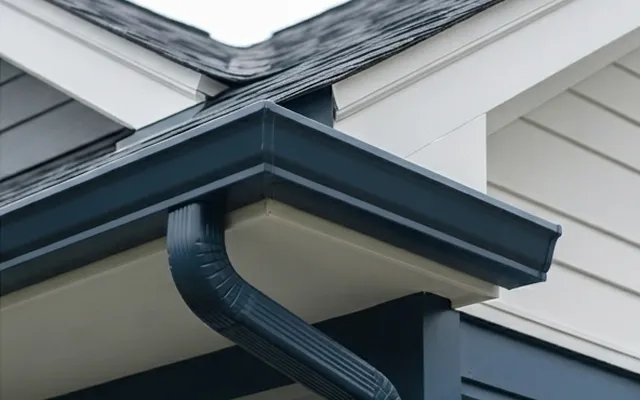
Seamless gutter installation
New gutters for new builds, re-roofs and houses that never had them. Made to length on site.
Get a quote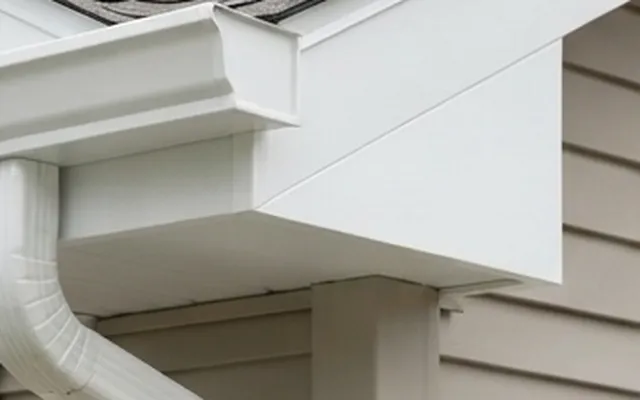
Gutter replacement
Old sectional, rusted or bent gutters taken down and replaced with seamless runs and new hangers.
Get a quote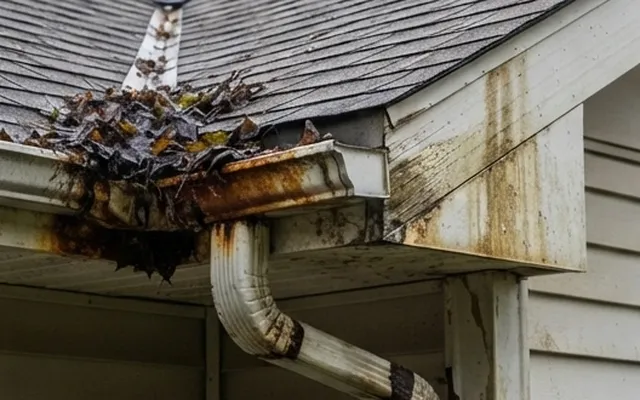
Gutter repair
Leaking corners, sagging runs, loose hangers and gutters that have lost their slope.
Get a quoteGutter guards
Micro-mesh, screens and covers that keep leaves, seeds and grit out of the gutter.
Get a quoteDownspouts & drainage
More or bigger downspouts, extensions and discharge that keep water off your foundation.
Get a quoteStorm & ice damage
Gutters crushed by hail, torn off by wind or pulled down by ice, repaired or replaced.
Get a quoteOne call. Four steps. No surprises.
Free measure
Call and book a visit. The contractor measures every run, counts corners and downspouts, and checks the fascia.
Pick your system
5 or 6-inch, aluminum, steel or copper, your colour, and guards if you want them. Quoted in writing.
Off with the old
Old gutters come down and are hauled away. Soft fascia is dealt with before anything new goes up.
Hang, seal, test
Seamless runs formed on site, hung at the right slope, sealed, and flushed with water to check the flow.
Seamless vs sectional gutters.
Sectional gutters are cheaper to buy off the shelf. Here's what the extra for seamless gets you. For a short run on a shed, sectional is fine.
| Feature | Seamless | Sectional |
|---|---|---|
| Joints along each run | Only at corners and outlets | One every section |
| Leak risk over time | Lower | Higher as the sealant ages |
| Made | On site, cut to your walls | Pre-cut lengths joined together |
| Look | Clean, continuous lines | Visible seams |
| Holding up to ice | Fewer joints for ice to split | Joints are the weak points |
| Best for | Most whole-house jobs | Short runs, sheds, DIY patching |
Know before you buy.
Seamless vs sectional gutters
Why most replacements go seamless, and when sectional still makes sense.
Read guide5-inch vs 6-inch gutters
How roof size, pitch and storms decide which size your house needs.
Read guideIce dams and gutters
What causes ice dams in Iowa winters, and what gutters can and can't do.
Read guideBefore you hire anyone, check these.
Council Bluffs has a city Building Division that issues permits for work like roofing and siding, so if your gutter job is part of a re-roof or siding project, ask whether it needs a permit. In Iowa, contractors who earn $2,000 or more a year from construction must register with the state, and you can look a contractor up before you hire them. The Iowa Attorney General also publishes tips on getting written estimates, limiting upfront payment and spotting storm-chaser scams after hail and wind.
Questions locals ask before they book.
How much do new gutters cost in Council Bluffs?
It depends on how many linear feet your house needs, how many downspouts, the size (5 or 6-inch), the material, how many stories, and whether old gutters come off first. The quickest way to a real number is a free measure: the contractor walks the roofline and gives you a written price.
Are seamless gutters better than sectional?
For most houses, yes. Seamless gutters are formed on site from one coil, so each run has no joints except at corners and downspout outlets. Fewer joints means fewer leaks. Sectional gutters are joined every few feet, and those joints are where old gutters start dripping.
Do I need 5-inch or 6-inch gutters?
Five-inch K-style suits most Council Bluffs houses. Six-inch carries more water and suits large or steep roofs, long runs, valleys that dump water in one spot, and gutters that already overflow in storms.
Can you fix my gutters instead of replacing them?
Often, yes. Leaking corners, loose hangers, sagging runs, wrong pitch and disconnected downspouts can usually be repaired. If they're rusted through, badly bent, or leaking at every joint, replacement is usually the better spend. You'll be told which, and why.
Do gutter guards stop ice dams?
No. Ice dams form when heat from the house melts roof snow and it refreezes at the colder eaves. That's an attic insulation and ventilation problem. Guards keep debris out so water keeps moving the rest of the year.
Can gutters be installed in winter?
Yes, on dry days. Ice and snow on the roof edge or very cold weather can push a job back a few days. Fall and spring are busiest, so booking a measure early gets you a better slot.
Which towns do you cover?
Council Bluffs and Carter Lake, plus Glenwood, Missouri Valley, Treynor and other western Iowa towns in Pottawattamie, Mills and Harrison counties. Use the town checker above or call with your address.
Is the quote really free?
Yes. Measuring and quoting is free, with no obligation to go ahead.
Council Bluffs and nearby towns.
From the older streets near downtown and the bluffs to the newer subdivisions east and south, plus Carter Lake on the Nebraska side of the river.
Ready for gutters you can forget about?
One call to a local gutter contractor covering Council Bluffs, Carter Lake and the towns around them. They measure, quote in writing, and do the job.
- 1Call (712) 529-2910. Takes a couple of minutes.
- 2Book a time for a free on-site measure.
- 3Get a written quote. No obligation.
Get your free gutter quote
(712) 529-2910- Your address and a good time to visit
- New gutters, replacement, repair or guards
- Anything you've noticed: leaks, overflow, sagging